Monday, January 9, 2023

Research in the Child Development Lab and a Newfound Appreciation for Coding

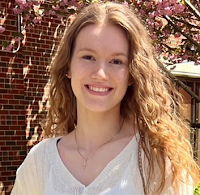
 Ricaute Rogers, Verrazzano Class of 2022, completed major in Psychology BS

With the completion of my capstone project, there is much to take away and be grateful for. My project focused on infant sleep and how it was affected by the motor acquisition. In other words, I examined how sleep changed in infants when they were learning how to sit.

This research opportunity took place virtually in the Child Development Lab due to COVID restrictions, and I was able to get a first-hand view of the lab’s ability to function during a pandemic.

During my time in the lab, which was headed by Dr. Sarah Berger, I learned that the workflow of the lab did not slow down, nor did the lab's significance decline because of the situation it was placed in. We simply learned how to adapt and overcome, and being part of the process was a blessing.

Going into college freshman year, I honestly never saw myself working in the Child Development Lab. If you told me I was going to work in the Child Development Lab during a pandemic, I would tell you you’re lying. The uniqueness of the situation granted all the memories that I have, and hopefully it’s something that I can look back at and laugh at, as an age where we were all staring at our laptops and working collectively.

The last thing I’ll share about the lab is just being thankful for getting the opportunity to code for infant research. In my senior year of high school, I took an introduction to computer science class, and I absolutely hated it. I told myself that I would never code again. The Child Development Lab gave me a new perspective on coding and honestly opened a door that I thought I had closed. Without completing this capstone and joining the Child Development Lab, getting that second opportunity would be have never happened.


Monday, January 2, 2023

How Strategies Used by Revolutionary Groups Could be Applied for Change in America

Tyler Pierce, Verrazzano Class of 2022, completed major in Economics and minor in History

My capstone was centered around analyzing the historical context and strategies used by successful revolutionary groups, and how learning about these revolutionary groups could provide lessons and knowledge that is applicable to movements for change in America.
Before I began my research, my hypothesis was that the revolutions would all provide different lessons to take away and apply to today. Instead, what I found were fundamental similarities and patterns that almost provided a blueprint for a successful movement for radical change. I read hundreds of pages of Russian, Chinese, and American history that I had not been exposed to before.
Politically, I am left leaning, and in the past had prided myself on understanding many of the different movements in America fighting for change like the green movement, the Black Lives Matter movement, or the Feminist movement. I believed that all of these groups were hitting different parts of legislation at the same time and had great potential. I thought that the only reasons they were not successful was solely due to external factors or disorganization within the party. One of my major conclusions from my research was that if all of these groups do not combine into a single umbrella/coalition party, they will never gain enough political power to inspire the real long-lasting change that they seek. Also, the average person can not keep up with all of these movements and groups at the same time, and normally choose to represent only one or two of the movements.
Essentially, I see all the movements as a house divided. What unification does, aside from gaining political power, is accelerate social influence so it becomes much easier to rally supporters of different groups around one cause at a time. Lastly, unification leads to smooth mobilization of resources. This is not a new idea, but one that is not normally supported with historical facts and analysis.
In addition to what the revolutionary movements did correctly in the past, I discussed what they did wrong to lose power, or lose focus on their own goals. I concluded that what a majority of the movements were missing was a strong emphasis on democracy. It is incredibly difficult to prove loyalty to the general public when they do not have any say in their parties’ actions. Also, without one of the main focuses being democracy, then it becomes much easier for corruption to bleed into the party.
In tandem with the historical context of the countries the revolutions took place in, I briefly analyzed today’s conditions in America and the similarities and differences between contemporary America, the USSR, the PROC, and America during the American Revolution.
Overall, I learned a ton during the research phase of the project and had a lot of fun during the writing phase. I chose a very broad and rich topic because it is something I have been passionate about since high school, and I feel very rewarded and proud of myself for the paper I produced. I am grateful to have had the opportunity to write a paper that could help people to understand why movements have barely gotten off the ground in the past 70 or so years in America, from a unique perspective of what the movements are doing wrong rather than external factors that may have contributed to their inconsistent levels of influence, like smear campaigns against the leaders of the movements or powerful lobbying in congress. Also, I am grateful to have had the pleasure of working with Professor Collins from the History department who was an enormous help in the direction and organization of the paper.


Monday, December 26, 2022

How Do Our Brains Use Our Experiences to Evolve/Create Information?

 Jonathan Falcone, Verrazzano Class of 2022, completed major in Psychology and minor in History 

Doing this capstone was truthfully much more work than I had anticipated it to be, but I was happy to do it and I learned a lot from it.

In my research I read article after article, journal after journal, gaining information in for my topic, which is about our memory. I already had an idea about some of the information, which certainly helped, but not knowing a lot of it was difficult. 

Certain forms of memory I wasn’t even aware existed. I carefully considered every word I wrote to try my best to make sure anything I said was not incorrect, as I did not want to spread any misinformation.  And still, my first draft was… ugly LOL! Thankfully, my mentor was an expert in the field and was able to point me in the direction of better and more accurate information.

Throughout my capstone, and the many, many edits I had to make, I also learned how to find better materials for research. I found out how to find more trustworthy resources and sift through journal articles and scientific papers for the best and most accurate information.

I have learned how to construct a cohesive APA formatted research article and how to gain valuable and accurate information, as well as deciding which articles I am able to find as trustworthy.  


Monday, December 19, 2022

Peace in the Middle East? The Role of Israeli-Palestinian Peace Plans in the Ongoing Conflict

Sandra Abdella, Verrazzano Class of 2022, completed majors in Economics and Political Science and minor in Legal Studies 

Writing my thesis has summed up the majority of my final semester at the College of Staten Island. I started out with little to no knowledge about the Palestinian-Israeli Conflict. I can now confidently say that I learned an immense amount of information on the conflict, the peace plans, and some reasons as to why peace has not yet been achieved.

My paper was about the conflict between the two territories, and the obstacles that contributed to the failure of reaching a viable solution up to today. It delved into three main roadblocks that I think had the most significant roles in the conflict. The United States Involvement, the Oslo Accords, and the domestic infighting within Israel and Palestine were analyzed and discussed throughout the paper.

My main takeaway from this thesis is that research is time consuming and difficult, but not impossible. The 25 pages took me about two months to finish writing. The research component started 3 months before that. To simply start the process, I bought a book and read through it once. I became confident in my topic and went back to annotate the same book again. It became easier after that because I chose a specific section of the conflict that I wanted to focus on and dived deeper into it. I read some articles to familiarize myself with broad concepts, and then found more scholarly articles and books that taught me more about peace plans and the road to peace.

To write the paper, I began by creating an outline for myself and started to write directly on the outline. By adding in bits and pieces all over the outline wherever I knew what I wanted to say without a specific sequence, I was able to gather my thoughts collectively and then organize them at a later time.

In my opinion, the most difficult part of the process was gathering research. Many sources were apparently biased from the start and others were opinion pieces instead of objective statements. It was challenging to read through the biases and collect the facts in order to analyze the events on my own. All in all, it was a fun experience and I am proud to say that I was able to finish it all with the help of my mentor, Professor Peter Kabachnik, PhD, Geography.


Monday, December 12, 2022

Researching Process of The Harlem Nine and School Integration

 Aurora Haxhari, Verrazzano Class of 2022, completed major in History (7-12) 

Working on this research project was definitely a process that took long hours of preparation before even getting into the work itself. Picking a topic was a process because with history, the options are endless. However, with my passion for education and activism, it was not hard for me to wind up with my decision. Researching the Harlem Nine and school integration in the ‘50s and ‘60s in New York City was really exciting for me. When my faculty mentor Professor John Dixon told me about the Harlem Nine, I did some research on them and was hooked.

This project took many days of reading, reading, and more reading. Since the Harlem Nine was a small group and case, it was pretty difficult to find many primary and even secondary sources. However, with help from Professor Dixon, I was able to find enough sources to help me build my research. Throughout this process, I learned that I could get help from others. I even have a friend in law school who was able to gain access to the actual court case because she had free access to old cases through her school. This was of great help because I was able to read the detailed case which helped me improve my understanding and argument.

I learned that the process of completing research varies for many people. For me, I found it most effective to outline the headings and subheadings of my research and then divide the sources I would use within each section. Then, I worked on one section at a time. In order to avoid feeling overwhelmed, which could happen often, I broke down my work and due dates with Professor Dixon. Knowing that my first draft would be due in early April, I broke down each section of the paper, placing due dates on myself, and working on it over a few weeks.

During the semester, I was balancing student teaching at Port Richmond High School, working at my part-time job every day after student teaching, and being a part of two cheerleading teams (a non-profit team and CSI cheerleading). This was definitely trying at times, but I knew I could get it done. Researching something I was passionate about made it much more exciting and less stressful. I learned that despite being challenging while juggling so much in life, learning outshines that and is worth it all. The beauty in knowledge and education outweighs the troubles.